
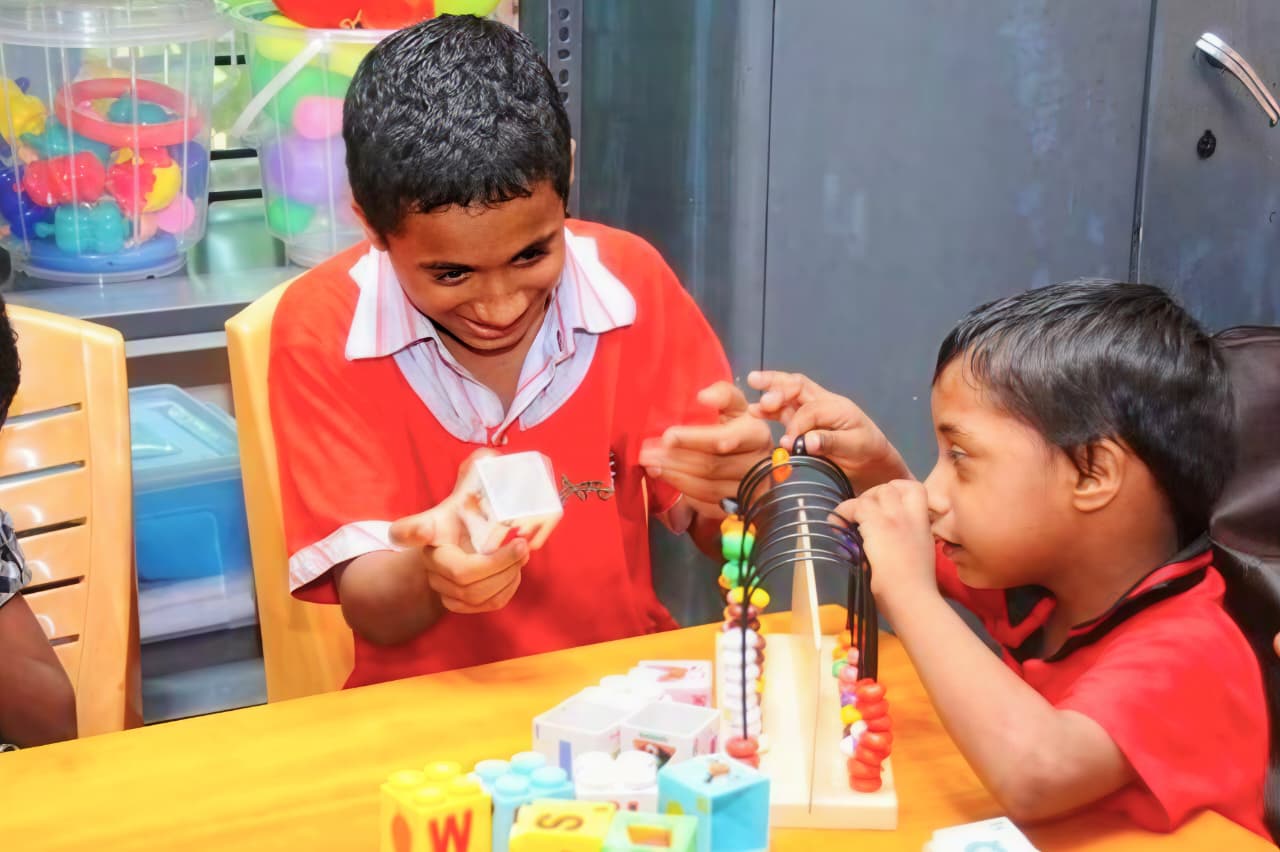
 As a teacher, you may encounter students who avoid eye contact, struggle with verbal instructions, become distressed by loud noises, or prefer to sit alone during group activities. These behaviours are often misunderstood as disobedience, a lack of motivation, or poor parenting. In reality, they may reflect a child’s unique way of experiencing the world, commonly seen in children on the autism spectrum.
Autism Spectrum Disorder (ASD) is a neurodevelopmental condition that affects communication, social interaction, and behaviour. As discussed in our earlier blogs, autism is not a disease but a different way of processing information and responding to the environment. Each autistic child is unique, with their own strengths and challenges, and therefore requires understanding and flexible support in classroom settings.
How Autism May Appear in the Classroom
Children with autism might have very different symptoms in school settings. While some children may need extra help for both behaviour and learning, others may have excellent academic ability but struggle with social communication. Teachers may observe repetitive behaviours, intense focus on certain interests, sensory sensitivity to light or noise, difficulties following multi-step directions, and issues transitioning between activities. It is important to remember that behaviours often reflect unmet needs. What may appear as inattention, withdrawal, or disruption is frequently a child’s way of communicating discomfort, confusion, or overwhelm.
Supportive Classroom Practices
Teachers can create a supportive environment for autistic students by making small, thoughtful adjustments.
- Use clear, simple instructions.
- Use visual aids.
- Maintain predictable routines,
- Break tasks into manageable steps.
- Encourage effort with positive reinforcement
- Provide sensory-friendly options like quiet spaces or movement breaks
- Build on the child’s strengths and interests.
At the same time, avoid practices that may increase stress or anxiety:
- Do not interpret withdrawal or repetitive behaviours as misbehaviour.
- Avoid forcing eye contact or social interaction.
- Refrain from punishment-based strategies for sensory or anxiety-related behaviours.
- Do not compare students to neurotypical peers or set unrealistic expectations.
Role of Special Educators
Special educators play a key role in strengthening inclusive school systems and supporting classroom teachers. They work closely with teachers to ensure that children with special needs receive appropriate support within mainstream classrooms.
Qualifications of special educators
- A Diploma in Special Education, or
- A bachelor’s or master’s degree in special education,
- Recognised by the Rehabilitation Council of India (RCI)
- With specialisation in areas such as Autism Spectrum Disorder, Intellectual Disability, or Learning Disabilities
Special educators support schools in using tools like PRASHAST to systematically identify Children with Special Needs (CwSN), enabling early support, classroom accommodations, and referrals without waiting for a formal diagnosis. Schools can further strengthen inclusion by building multidisciplinary teams, conducting regular teacher capacity-building programmes, engaging parents through awareness initiatives, and ensuring access to appropriate resources and referral networks.
Collaboration for Inclusion
The National Education Policy 2020 emphasises early identification, school-based support, and multidisciplinary collaboration. Teachers play a key role in identifying developmental differences, and inclusive education is most effective when they work closely with parents, special educators, and other professionals supporting Children with Special Needs (CwSN). Tools like PRASHAST enable early identification and planning of classroom support, while schools can strengthen inclusion through multidisciplinary teams, regular teacher training, parent engagement, and access to appropriate resources and referral networks.
We work closely with educators to strengthen school systems through teacher training, classroom strategies, and providing support at Pragmana Foundation. We believe that by equipping teachers with appropriate knowledge, skills and attitude, children with special needs can be genuinely included and understood in classrooms across the country.
Explore our earlier blogs in this series to learn more about autism and early identification in school settings:
https://www.pragmanafoundation.org/understanding-autism-spectrum-disorder-a-simple-guide-for-parents/